

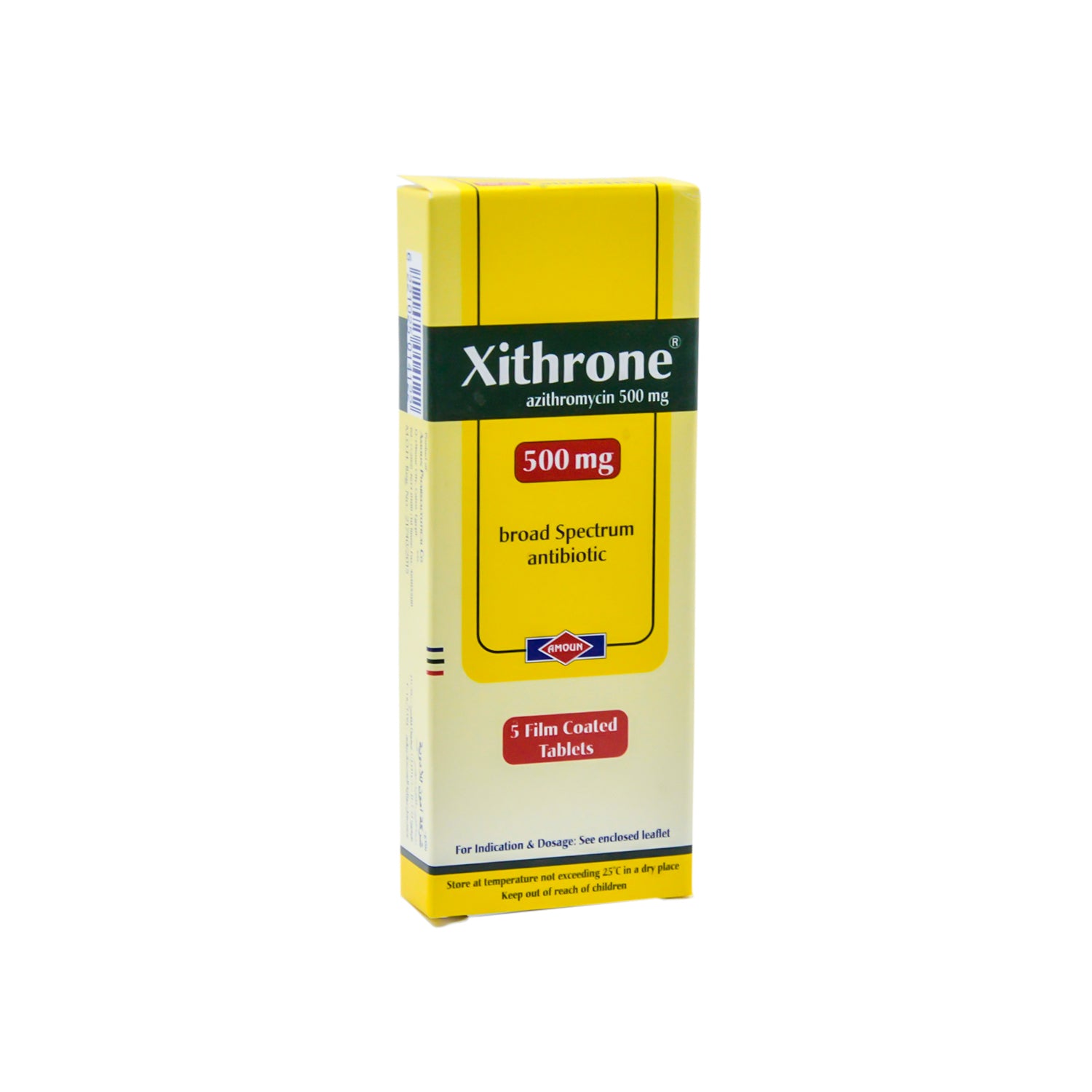
Xithrone 500mg Azithromycin
5 tablets
Description
# Drug Description
Brand Name
Xithrone 500 mg
Read more
Generic Name
Azithromycin
About The Drug
Xithrone 500 mg contains azithromycin, an antibiotic used to treat many common bacterial infections. It works by stopping bacteria from growing, which helps your body fight the infection and recover more comfortably. It is often chosen because it is taken for a short course and is effective for infections in the chest, throat, ears, skin, and some other parts of the body. It only works for bacterial infections, not for colds or flu caused by viruses.
Indications
When do you need this medication?
* Throat and tonsil infections: Helps treat bacterial sore throat and tonsillitis, reducing pain, swelling, and fever.
* Chest infections / bronchitis: Used for certain bacterial respiratory infections that cause coughing, mucus, and breathing discomfort.
* Pneumonia: May be prescribed for mild to moderate community-acquired lung infections caused by susceptible bacteria.
* Ear infections: Helps treat bacterial middle ear infections, especially when pain and fever are present.
* Sinus infections: Used for some bacterial sinus infections that cause facial pressure, congestion, and thick nasal discharge.
* Skin and soft tissue infections: Treats certain bacterial skin infections that may cause redness, swelling, warmth, or pus.
* Some sexually transmitted infections: May be used for specific infections such as chlamydia, depending on your doctor’s advice.
Dosage and Administration
How to use the drug safely and effectively?
* Usual Dosage:
The dose depends on the type of infection and your doctor’s prescription. A common adult regimen is 500 mg once daily for 3 days, but some infections may require a different schedule.
*For children, the dose is usually based on body weight and must be prescribed by a doctor.*
* Method of Administration:
Take Xithrone 500 mg by mouth with a full glass of water. It may be taken with or without food, but taking it after a light meal may help reduce stomach upset. Try to take it at the same time every day. Swallow the tablet whole unless your doctor or pharmacist tells you otherwise.
* Important Use Tips:
- Finish the full course even if you start feeling better.
- Do not skip doses.
- Do not use it for viral illnesses like the common cold.
- If you miss a dose, take it as soon as you remember unless it is almost time for the next dose. Do not double the dose.
Side Effects
What might you feel?
* Common side effects: Nausea, diarrhea, stomach pain, vomiting, headache, and mild dizziness.
* Less common but serious side effects: Severe allergic reaction, rash, trouble breathing, yellowing of the skin or eyes, severe diarrhea, or irregular heartbeat.
* When to seek medical help: Contact a doctor right away if you develop swelling, difficulty breathing, severe skin reaction, chest palpitations, or persistent severe diarrhea.
## Warnings and Precautions
* Tell your doctor if you have liver disease, heart rhythm problems, or a history of allergy to antibiotics.
* Use with caution if you are taking medicines that may affect the heart rhythm.
* Do not take azithromycin if you are allergic to it or other similar antibiotics unless your doctor says it is safe.
* If you are pregnant or breastfeeding, ask your doctor before use.
## Drug Interactions
* Antacids containing aluminum or magnesium: May reduce absorption; take azithromycin at least 2 hours before or after them.
* Blood thinners such as warfarin: May increase bleeding risk; monitoring may be needed.
* Heart rhythm medicines: Some medicines can increase the risk of irregular heartbeat when taken with azithromycin.
* Other antibiotics or medicines affecting the liver: Your doctor may need to review your treatment carefully.
## Storage
* Store at room temperature, away from heat and moisture.
* Keep the tablets in their original packaging.
* Keep out of reach of children.
* Do not use after the expiry date.
## Important Note
Xithrone 500 mg is an antibiotic and should be used only when prescribed by a healthcare professional. Using antibiotics incorrectly can make infections harder to treat in the future.
Key Facts
- Brand
- Amoun
- Category
- AB
Shipping & returns
- Delivery
- Standard delivery is typically within 60 minutes. Orders are fulfilled by the closest Lotus Pharmacy to your address, with your preferred payment method, including online, selected at checkout.
- Insurance prescriptions
- For insurance orders, send the prescription, insurance approval, and card via WhatsApp so a pharmacist can confirm before dispatch.
- Returns & exchange
- A 14-day return and exchange policy applies with the original receipt. Personal-use cosmetics, medicines requiring specific storage, and altered products are non-returnable.
Always read the product leaflet for the full list of ingredients and precautions, and consult your healthcare professional or physician before use.