

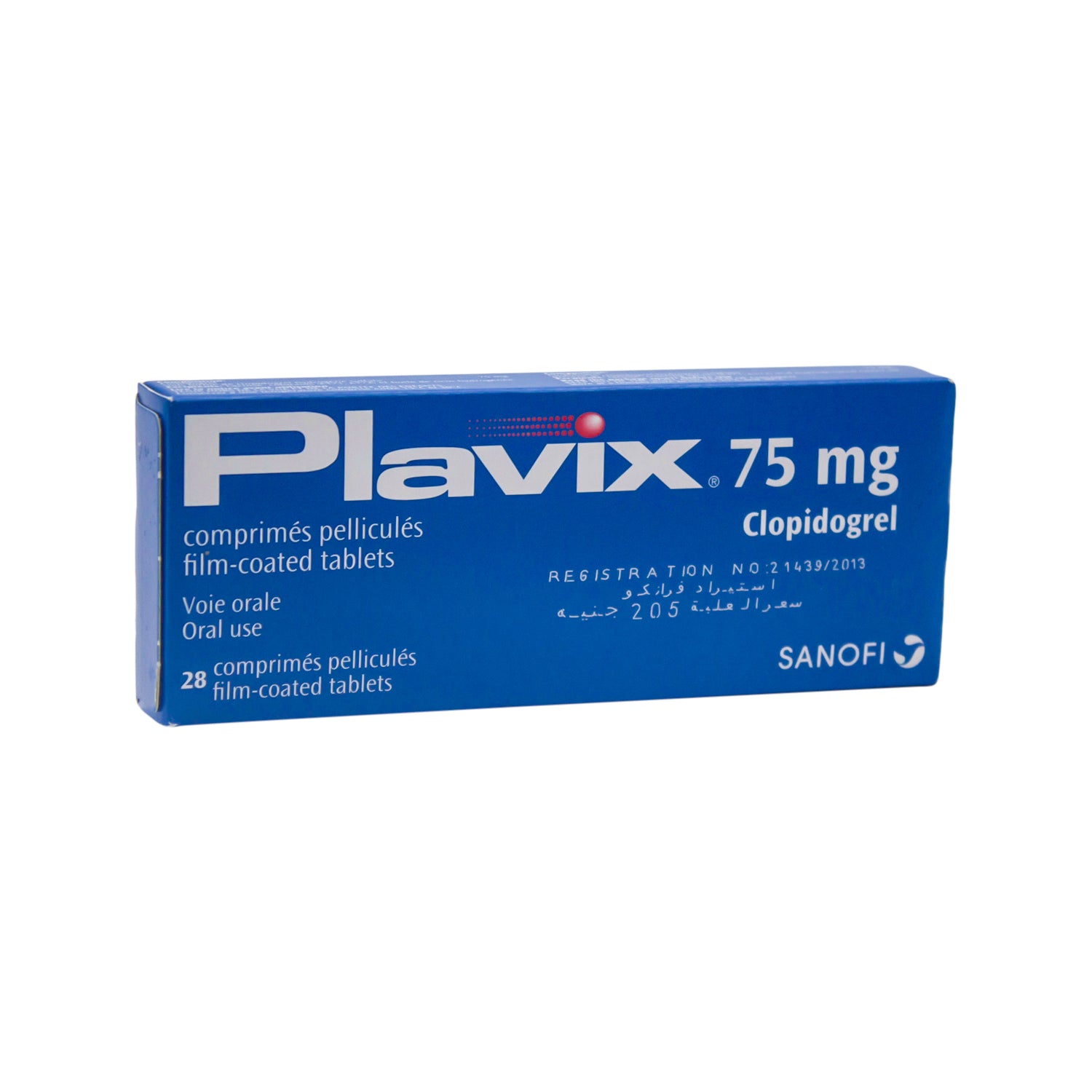
Plavix 75mg Clopidogrel Anti-Thrombotic Medication
28 tablets
Description
# Drug Description Template
Brand Name
Plavix 75 mg
Read more
Generic Name
Clopidogrel
About The Drug
Plavix (clopidogrel) is an anti-thrombotic medicine that helps keep blood clots from forming. It works by making your blood less likely to stick together and form clots that can block blood flow. This can help lower the risk of heart attack, stroke, and other serious circulation problems, especially if you have a history of heart disease, stroke, or certain blood vessel conditions. It is commonly used as a long-term protection medicine when your doctor wants to reduce the chance of dangerous clot-related events.
Indications
When do you need this medication?
* Heart attack prevention: Helps lower the risk of another heart attack in people who have had one before.
* Stroke prevention: Helps reduce the risk of ischemic stroke, especially in patients with a history of stroke or mini-stroke (TIA).
* Peripheral arterial disease (PAD): Helps improve blood flow in narrowed arteries in the legs and lowers clot-related risks.
* After certain heart procedures: Often used after stent placement or other coronary procedures to help prevent the stent from becoming blocked by a clot.
* Acute coronary syndrome: Used with other medicines to help protect the heart in unstable angina or after a heart attack.
Dosage and Administration
How to use the drug safely and effectively?
* Usual Dosage:
* Adults: The usual maintenance dose is 75 mg once daily.
* In some cases, your doctor may start with a higher first dose (loading dose) before continuing with 75 mg daily, especially after a heart attack or stent placement.
* Children: Clopidogrel is generally not routinely used in children unless specifically prescribed by a specialist.
* Method of Administration:
* Take one tablet by mouth once daily with a glass of water.
* You may take it with or without food.
* Try to take it at the same time each day to help you remember.
* Swallow the tablet whole; do not crush or chew unless your doctor or pharmacist tells you otherwise.
* Do not stop taking it on your own, especially if you have a heart stent, because stopping suddenly may increase the risk of a clot.
Side Effects
* Common side effects:
* Easy bruising
* Nosebleeds
* Bleeding gums
* Diarrhea
* Stomach upset
* Rash or itching
* Serious side effects:
* Unusual or heavy bleeding
* Black stools or blood in the urine
* Severe headache, weakness, or trouble speaking
* Shortness of breath
* Severe skin reaction or swelling of the face
Warnings and Precautions
* Tell your doctor if you have a bleeding disorder, stomach ulcer, liver disease, or recent surgery.
* Be careful if you are at higher risk of bleeding, such as after an injury or if you frequently fall.
* Inform your doctor or dentist that you are taking clopidogrel before any procedure.
* If you notice signs of serious bleeding, seek medical help right away.
* Some people may respond less well to clopidogrel due to genetic factors or other medicines.
Drug Interactions
* Blood thinners and antiplatelet medicines: May increase bleeding risk when used with warfarin, aspirin, ticagrelor, or other similar medicines.
* NSAIDs: Pain relievers like ibuprofen or naproxen can increase bleeding or stomach irritation.
* Certain stomach acid medicines: Some proton pump inhibitors, especially omeprazole and esomeprazole, may reduce clopidogrel’s effect.
* Other medicines affecting blood clotting: Your doctor may need to monitor you more closely if you take any drug that increases bleeding risk.
Storage
* Store at room temperature, away from moisture and direct heat.
* Keep the tablets in their original packaging until use.
* Do not store in the bathroom.
* Keep out of reach of children.
Important Note
This medication should be used exactly as prescribed by your doctor. If you miss a dose, take it as soon as you remember on the same day. If it is almost time for your next dose, skip the missed dose and continue your regular schedule. Do not take two doses at once.
Key Facts
- Brand
- Sanofi
- Category
- Blood Vessels (no RX)
Shipping & returns
- Delivery
- Standard delivery is typically within 60 minutes. Orders are fulfilled by the closest Lotus Pharmacy to your address, with your preferred payment method, including online, selected at checkout.
- Insurance prescriptions
- For insurance orders, send the prescription, insurance approval, and card via WhatsApp so a pharmacist can confirm before dispatch.
- Returns & exchange
- A 14-day return and exchange policy applies with the original receipt. Personal-use cosmetics, medicines requiring specific storage, and altered products are non-returnable.
Always read the product leaflet for the full list of ingredients and precautions, and consult your healthcare professional or physician before use.