

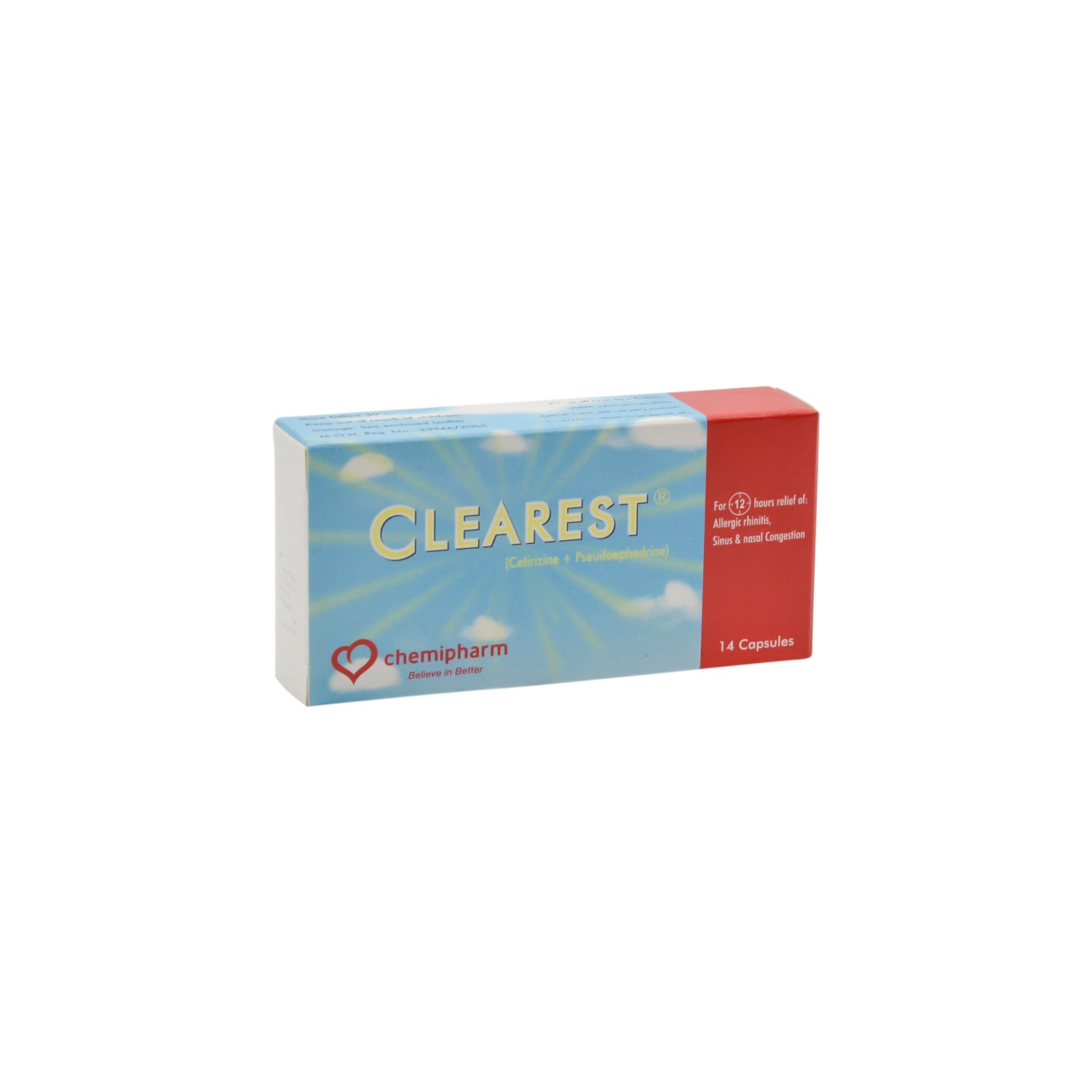
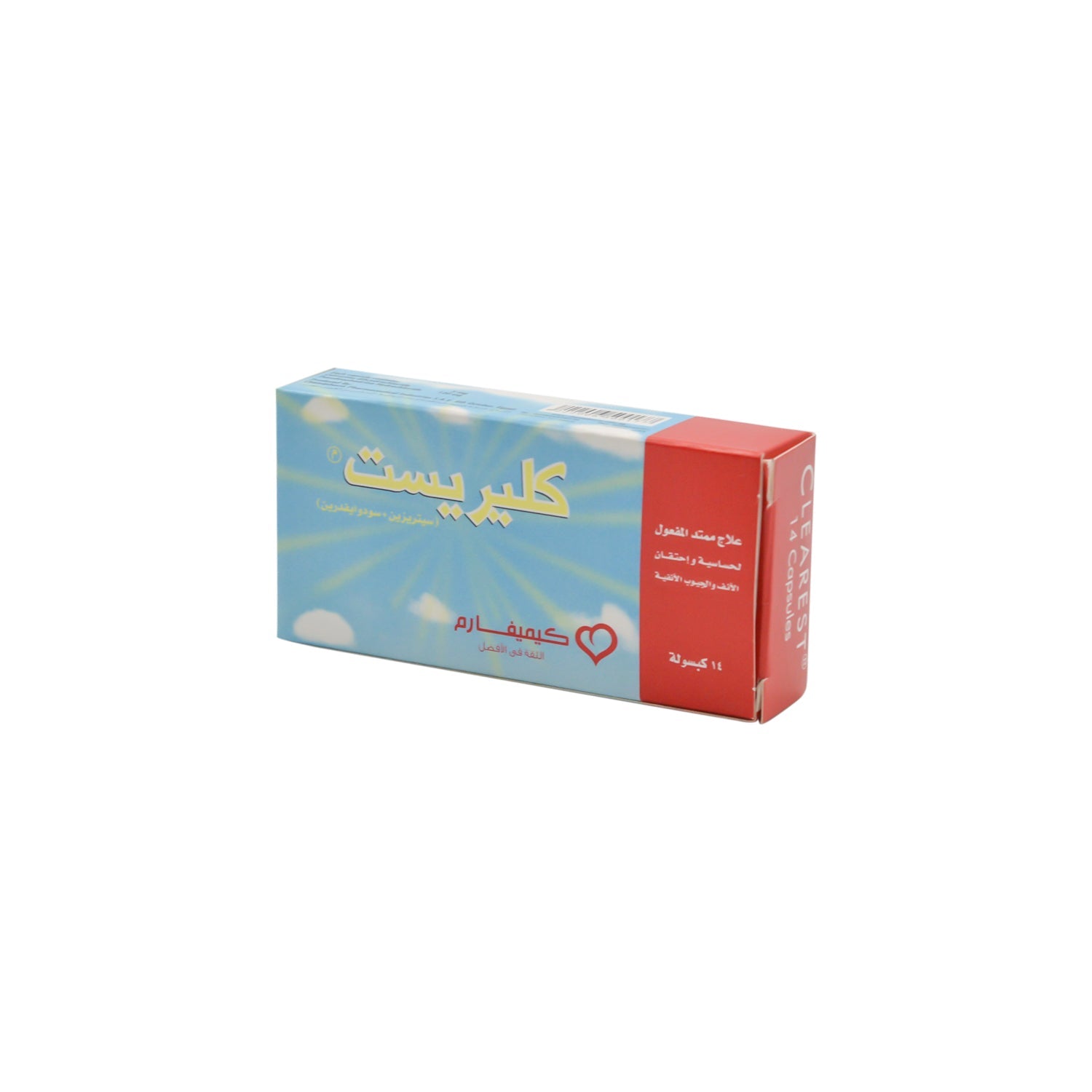
Clearest with Cetirizine & Pseudoephedrine for Relieving Allergic Rhinitis, Sinus & Nasal Congestion
14 capsules
Description
# Drug Description
Brand Name
Clearest with Cetirizine & Pseudoephedrine for Relieving Allergic Rhinitis, Sinus & Nasal Congestion
Read more
Generic Name
Cetirizine + Pseudoephedrine
About The Drug
Clearest with Cetirizine & Pseudoephedrine is a combination medicine that helps you feel better when allergy symptoms come with a blocked nose or sinus pressure. Cetirizine works by easing common allergy symptoms such as sneezing, runny nose, itchy eyes, and itching, while pseudoephedrine helps reduce swelling inside the nose so you can breathe more easily. This makes it especially useful when seasonal allergies or upper respiratory allergies cause both irritation and nasal congestion at the same time.
Indications
When do you need this medication?
* Allergic rhinitis: Helps relieve symptoms of allergies in the nose, such as sneezing, runny nose, itching, and nasal blockage.
* Nasal congestion: Helps open a blocked nose by reducing swelling in the nasal passages, making breathing easier.
* Sinus pressure and stuffiness: Helps ease pressure and fullness in the sinuses that often happens with allergies or congestion.
* Seasonal allergy symptoms: Helps control allergy flare-ups caused by pollen, dust, or other common triggers.
Dosage and Administration
How to use the drug safely and effectively?
* Usual Dosage: For adults and children 12 years and older, the usual dose is 1 tablet every 12 hours. Do not take more than 2 tablets in 24 hours unless your doctor tells you otherwise.
* Method of Administration: Swallow the tablet whole with a glass of water. It can be taken with or without food. Try to take it at the same times each day to help you remember. Because pseudoephedrine may cause trouble sleeping, it is often better to avoid taking it close to bedtime.
* Important Use Tips: Do not crush, chew, or split the tablet unless a healthcare professional advises you to do so. If you miss a dose, take it when you remember unless it is almost time for the next dose. Do not double the dose.
* Special Caution: This medicine is not usually recommended for children under 12 years old unless specifically prescribed by a doctor.
Side Effects
What might you feel?
* Common side effects: Dry mouth, dizziness, headache, nervousness, trouble sleeping, mild stomach upset, or feeling restless.
* Less common but serious effects: Fast heartbeat, severe dizziness, difficulty urinating, severe anxiety, or an allergic reaction such as rash, swelling, or trouble breathing. Seek medical help right away if these happen.
Warnings and Precautions
* Do not use this medicine if you have severe high blood pressure, heart disease, or severe kidney problems unless your doctor says it is safe.
* Be careful if you have glaucoma, thyroid disease, diabetes, prostate enlargement, or urinary problems.
* Avoid using it with other medicines that contain cetirizine, pseudoephedrine, or other decongestants.
* This medicine may make some people feel sleepy, dizzy, or unusually alert; avoid driving or operating machinery until you know how it affects you.
* If you are pregnant, breastfeeding, or taking regular medicines, ask your doctor or pharmacist before using it.
Drug Interactions
* Monoamine oxidase inhibitors (MAOIs): Can cause dangerous increases in blood pressure when taken with pseudoephedrine.
* Blood pressure medicines: Pseudoephedrine may reduce their effect.
* Other antihistamines or decongestants: May increase side effects or cause accidental overdose.
* Alcohol, sleeping pills, or sedatives: May increase dizziness or drowsiness.
Storage
* Store at room temperature, away from heat, moisture, and direct sunlight.
* Keep the tablets in their original container and out of reach of children.
* Do not use the medicine after the expiration date.
If you want, I can also turn this into a more pharmacy-style product page or a shorter customer-friendly version.
Key Facts
- Brand
- Chemipharm
- Category
- Sinusitis & Rhinitis Treatment
Shipping & returns
- Delivery
- Standard delivery is typically within 60 minutes. Orders are fulfilled by the closest Lotus Pharmacy to your address, with your preferred payment method, including online, selected at checkout.
- Insurance prescriptions
- For insurance orders, send the prescription, insurance approval, and card via WhatsApp so a pharmacist can confirm before dispatch.
- Returns & exchange
- A 14-day return and exchange policy applies with the original receipt. Personal-use cosmetics, medicines requiring specific storage, and altered products are non-returnable.
Always read the product leaflet for the full list of ingredients and precautions, and consult your healthcare professional or physician before use.