

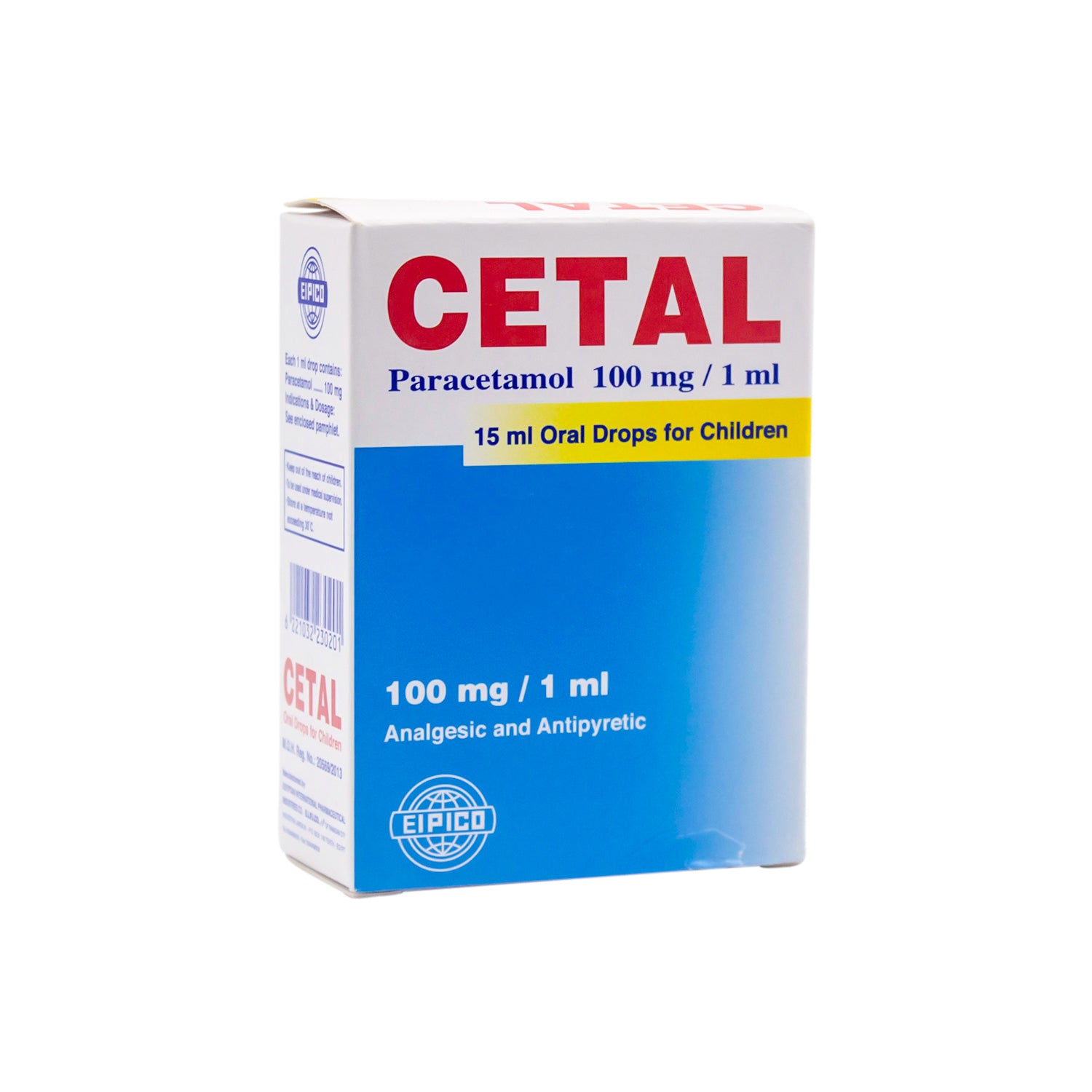
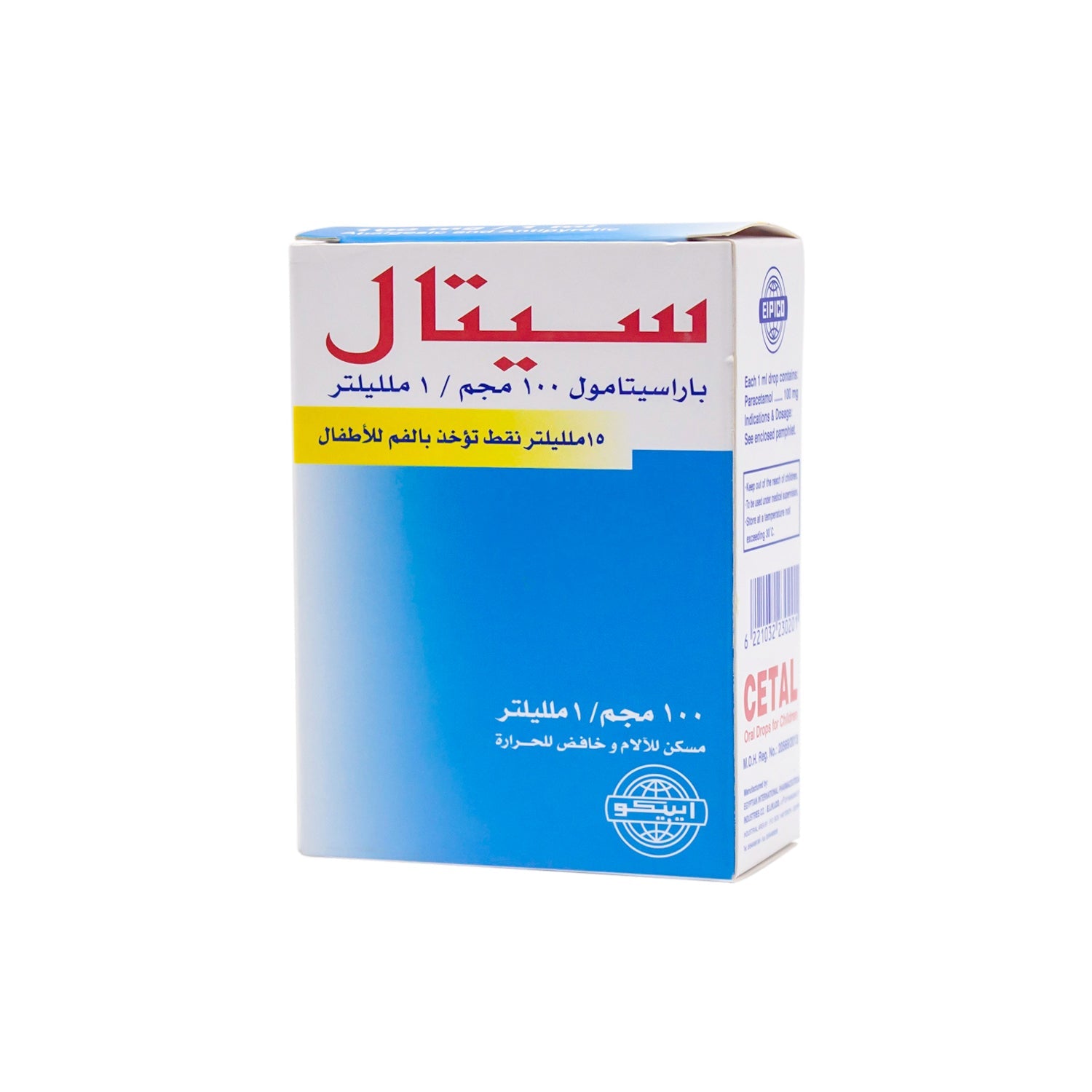
Cetal 100mg/ml Paracetamol Analgesic & Antipyretic Oral Drops for Children
15 ml
Description
# Drug Description
Brand Name
Cetal 100 mg/ml Paracetamol Analgesic & Antipyretic Oral Drops for Children
Read more
Generic Name
Paracetamol (Acetaminophen)
About The Drug
Cetal Oral Drops contains paracetamol, a widely used medicine that helps reduce fever and relieve mild to moderate pain in children. It is often used for common childhood problems like fever from colds or vaccinations, teething discomfort, headaches, and minor aches. Because it comes as oral drops, it is easy to give to infants and young children in small, measured amounts. When used correctly, it can help your child feel more comfortable and rest better.
Indications
When do you need this medication?
* Fever: Helps lower a high temperature caused by colds, flu, infections, or after vaccination.
* Mild to moderate pain: Relieves common pain such as headache, toothache, sore throat, earache, and body aches.
* Teething discomfort: Helps ease pain and irritability linked to teething in babies and toddlers.
* Post-vaccination discomfort: Can reduce fever and discomfort that may happen after routine childhood immunizations.
* General aches and pains: Useful for short-term relief of everyday minor pain in children.
Dosage and Administration
How to use the drug safely and effectively?
* Usual Dosage: The dose should be based on your child’s weight, not just age. The usual dose of paracetamol for children is 10–15 mg per kg of body weight per dose, given every 4 to 6 hours if needed. Do not give more than 4 doses in 24 hours, and do not exceed the maximum daily dose recommended by a healthcare professional.
* Method of Administration: Shake the bottle well before use. Measure the dose carefully using the provided dropper or measuring device. Give the drops by mouth, and you may give them directly or mix them with a small amount of water or milk if needed. Make sure your child drinks the full amount.
* Important Safety Tip: Always check the product strength (100 mg/ml) before calculating the dose, and use only the measuring device that comes with the medicine. If you are unsure about the correct dose for your child, ask a doctor or pharmacist.
Side Effects
What may happen while using it?
Most children tolerate paracetamol well, but some side effects may occur:
* Rare allergic reactions: Rash, itching, swelling, or trouble breathing need urgent medical attention.
* Stomach upset: Mild nausea or discomfort can happen, though it is not common.
* Liver damage from overdose: Taking too much paracetamol can seriously harm the liver, especially if more than one medicine containing paracetamol is used at the same time.
Warnings and Precautions
* Do not give this medicine if your child is allergic to paracetamol.
* Be extra careful if your child has liver disease or severe malnutrition.
* Do not use with other medicines that also contain paracetamol/acetaminophen, as this can lead to accidental overdose.
* For babies under 3 months, use only if advised by a doctor.
* If fever lasts more than 3 days, or pain lasts more than a few days, seek medical advice.
* If your child is dehydrated, vomiting repeatedly, or appears very unwell, consult a doctor promptly.
Drug Interactions
Paracetamol may interact with some medicines, including:
* Other paracetamol-containing products: Increases the risk of overdose.
* Warfarin and other blood thinners: Regular use may increase bleeding risk.
* Some anti-seizure medicines: May affect how paracetamol is processed by the body.
* Alcohol-containing products: Not usually relevant for children, but alcohol can increase liver risk in general.
Always tell your doctor or pharmacist about any other medicines, vitamins, or herbal products your child is using.
Storage
* Store at room temperature, away from heat and direct sunlight.
* Keep the bottle tightly closed and out of reach of children.
* Do not use after the expiry date.
* Check the bottle instructions for any specific storage guidance after opening.
When To Seek Medical Help
Contact a doctor or emergency service if:
* Your child has difficulty breathing, swelling, or signs of an allergic reaction.
* Your child may have taken too much paracetamol.
* Fever is very high, persistent, or comes with rash, stiffness, severe drowsiness, or breathing problems.
* Your child is not drinking fluids, seems dehydrated, or becomes unusually sleepy or weak.
If you want, I can also turn this into a more pharmacy-style product page or a shorter SEO-friendly version.
Key Facts
- Brand
- EIPICO
- Category
- Analgesic & Anti-Pyretic
Shipping & returns
- Delivery
- Standard delivery is typically within 60 minutes. Orders are fulfilled by the closest Lotus Pharmacy to your address, with your preferred payment method, including online, selected at checkout.
- Insurance prescriptions
- For insurance orders, send the prescription, insurance approval, and card via WhatsApp so a pharmacist can confirm before dispatch.
- Returns & exchange
- A 14-day return and exchange policy applies with the original receipt. Personal-use cosmetics, medicines requiring specific storage, and altered products are non-returnable.
Always read the product leaflet for the full list of ingredients and precautions, and consult your healthcare professional or physician before use.