
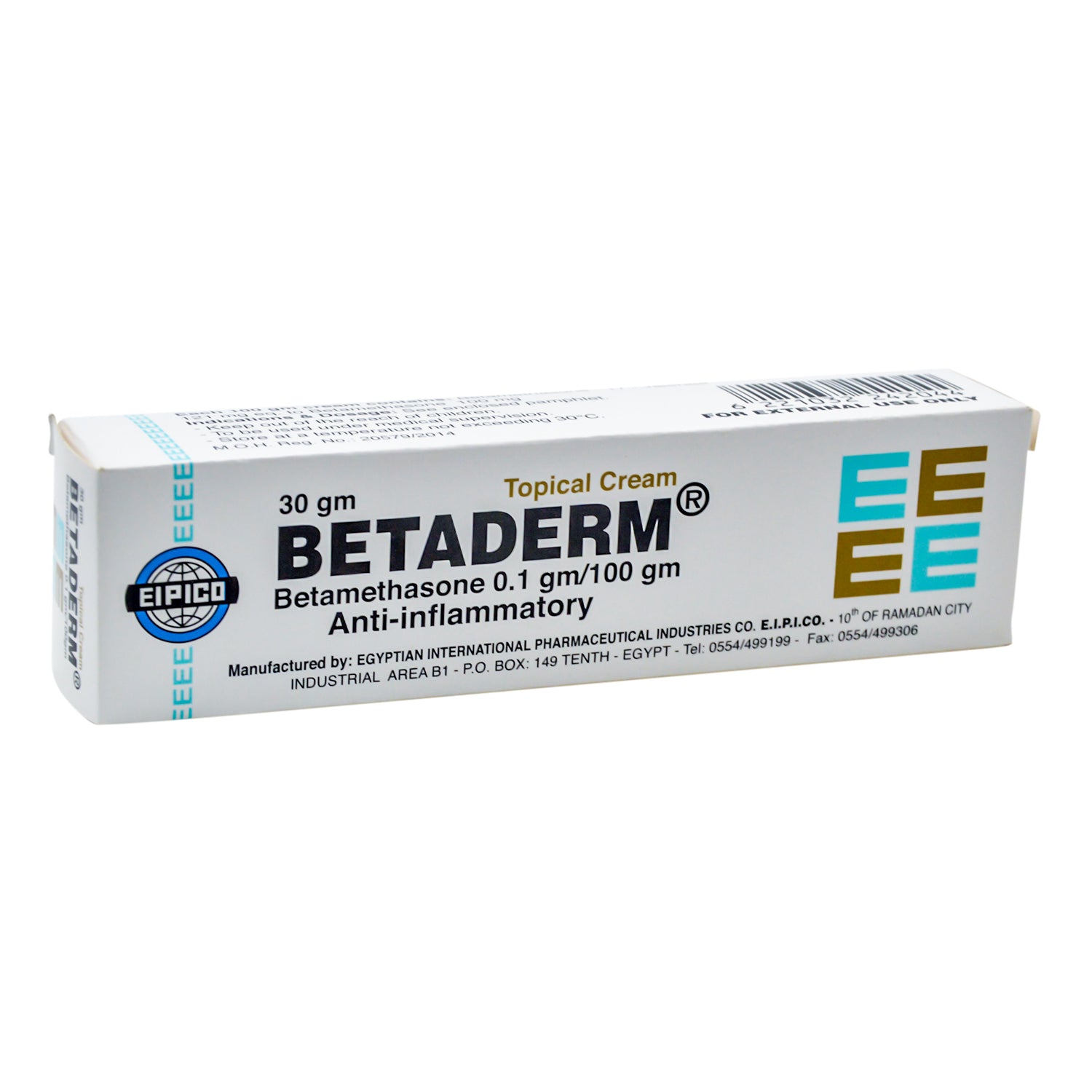
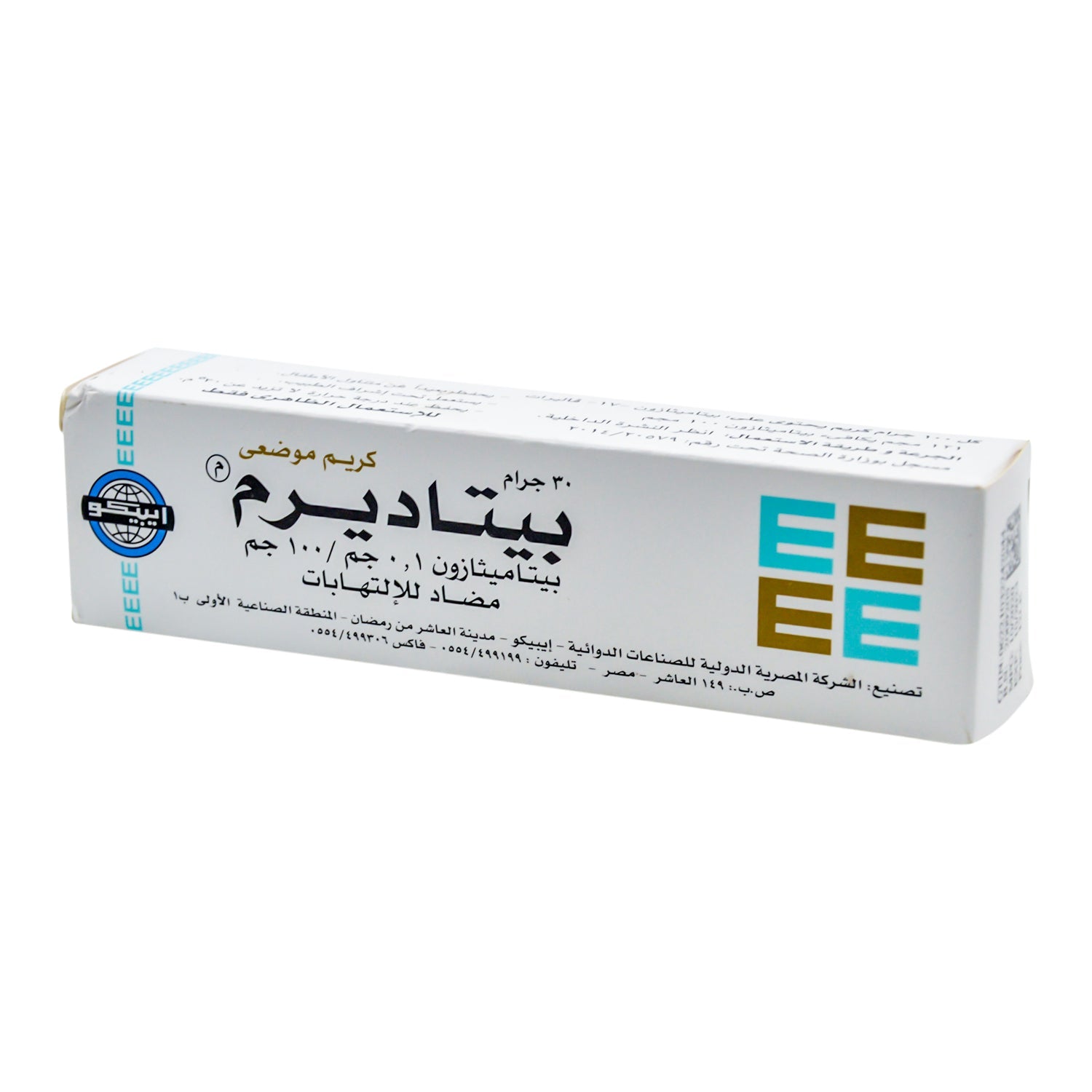
Betaderm 0.1gm/100gm Betamethasone Anti-Inflammatory Topical Cream
30 gr
Description
# Drug Description
Brand Name
Betaderm 0.1gm/100gm Betamethasone Anti-Inflammatory Topical Cream
Read more
Generic Name
Betamethasone (topical corticosteroid)
About The Drug
Betaderm cream contains betamethasone, a strong anti-inflammatory medicine applied directly to the skin. It helps reduce redness, swelling, itching, and irritation caused by several skin conditions. You may use it when your skin is inflamed and uncomfortable, and your doctor has recommended a corticosteroid cream to calm the symptoms quickly. Because it is a potent steroid, it should be used carefully and only for the period your healthcare provider advises.
Indications
When do you need this medication?
* Eczema and dermatitis: Helps soothe itchy, red, and irritated skin caused by eczema or different forms of dermatitis.
* Allergic skin reactions: Reduces inflammation, swelling, and itching after contact with something that irritates your skin.
* Psoriasis: Helps relieve thick, red, scaly patches by calming skin inflammation.
* Other steroid-responsive skin conditions: Used for certain skin problems that improve with corticosteroid treatment, as directed by your doctor.
Dosage and Administration
How to use the drug safely and effectively?
* Usual Dosage: Apply a thin layer to the affected skin area 1 to 2 times daily, or exactly as prescribed by your doctor. The amount and duration depend on the severity of your skin condition and the size of the area being treated.
* Method of Administration: Clean and dry the affected area first, then apply a small amount of cream and rub it in gently. Wash your hands after use unless your hands are being treated. Do not cover the area with a bandage or tight dressing unless your doctor tells you to. Avoid using it on the face, groin, armpits, or broken skin for long periods unless specifically instructed.
* Important Use Tips: Use the cream for the shortest time needed to control your symptoms. Do not apply more often or for longer than recommended, because overuse may cause skin thinning or other side effects. If your symptoms do not improve after a few days, contact your doctor.
Side Effects
* Common side effects: Mild burning, stinging, itching, dryness, or skin irritation where the cream is applied.
* Possible longer-term side effects: Skin thinning, stretch marks, visible small blood vessels, or color changes in the skin if used too long or on large areas.
* Rare but serious effects: Allergic skin reaction, worsening of the treated area, or signs that too much steroid is being absorbed into the body, especially with prolonged use.
Warnings and Precautions
* Do not use this cream on untreated skin infections, especially fungal, bacterial, or viral infections, unless your doctor also prescribed a treatment for the infection.
* Use with extra care in children, because stronger steroid creams can affect them more easily.
* Avoid contact with the eyes, mouth, and inside the nose.
* Tell your doctor if you are pregnant, breastfeeding, or have sensitive skin before using this medicine.
* Stop using it and seek medical advice if your skin gets worse, becomes very irritated, or shows signs of infection.
Drug Interactions
* When used on the skin, betamethasone has fewer interactions than oral steroids, but it can still interact if used over large areas or for a long time.
* Tell your doctor if you are using other topical medicines, especially other steroid creams, acne treatments, or products that may irritate the skin.
* Let your doctor know if you are taking corticosteroids by mouth, by injection, or using inhaled steroids, since combined use may increase the risk of side effects.
Storage
* Store at room temperature, away from heat and direct sunlight.
* Keep the tube tightly closed when not in use.
* Do not freeze the cream.
* Keep out of reach of children.
* Do not use the cream after the expiry date.
When To Contact A Doctor
* If your skin condition does not improve after several days of use.
* If the rash spreads, becomes painful, or shows pus, crusting, or signs of infection.
* If you develop severe irritation, an allergic reaction, or unusual skin thinning.
* If you need to use the cream for a long time or on a large area of skin.
Key Facts
- Brand
- EIPICO
- Category
- Skin Anti-Inflammatory
Shipping & returns
- Delivery
- Standard delivery is typically within 60 minutes. Orders are fulfilled by the closest Lotus Pharmacy to your address, with your preferred payment method, including online, selected at checkout.
- Insurance prescriptions
- For insurance orders, send the prescription, insurance approval, and card via WhatsApp so a pharmacist can confirm before dispatch.
- Returns & exchange
- A 14-day return and exchange policy applies with the original receipt. Personal-use cosmetics, medicines requiring specific storage, and altered products are non-returnable.
Always read the product leaflet for the full list of ingredients and precautions, and consult your healthcare professional or physician before use.